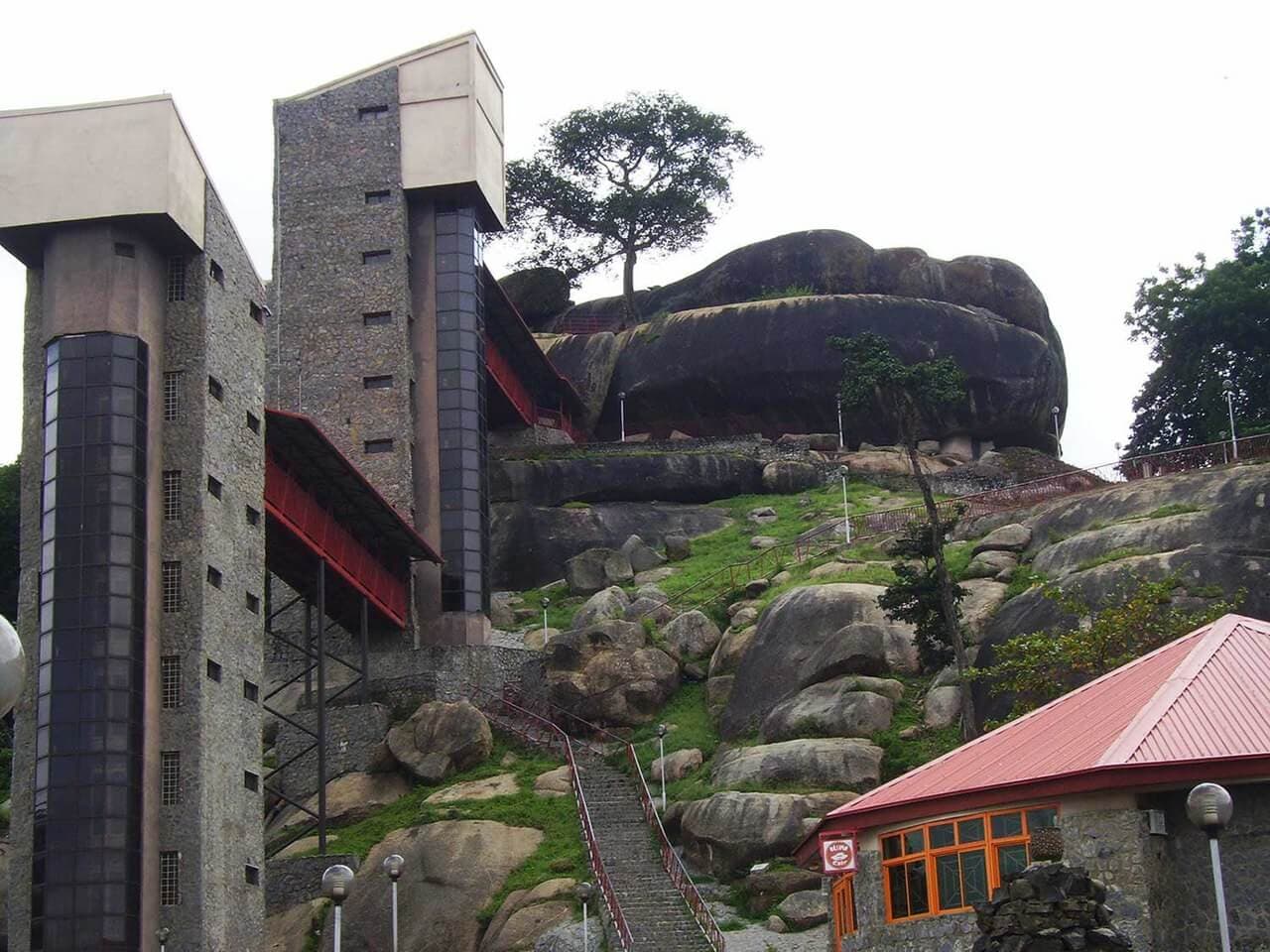
"A historic granite rock formation that served as a natural fortress during inter-tribal wars."
Olumo Rock rises above the city of Abeokuta in Ogun State, in southwestern Nigeria, its name literally meaning “under the rock” or “god molded this” in Yoruba. The rock’s caves, crevices, and strategic height once protected the Egba from attacks, turning it into both a wartime stronghold and a symbol of survival.
Today, a modern stairway and a small lift/elevator make it accessible to a wider range of visitors, while those seeking a more authentic feel can still climb sections of the original rocky paths and narrow passages. From the top, visitors enjoy sweeping views of Abeokuta’s rusty rooftops, the Ogun River, and landmarks like the Centenary Hall and churches and mosques that dot the skyline.
Olumo Rock is not just a relic; it is a living spiritual site where centuries-old beliefs and practices are still visible. Shrines and carved symbols around and within the rock reflect traditional Yoruba religion, and visitors sometimes encounter priests or elderly custodians who share stories of the rock’s protective powers.
Some of the oldest residents who once hid within the rock’s caves are said to have lived to remarkable ages, a detail often woven into local storytelling about divine protection and long life. This mix of tangible heritage and oral history makes the rock ideal for content that blends culture, spirituality, and tourism.
A visit to Olumo Rock usually starts at the base complex, where there are small museums, craft stalls, and guides offering narrated tours. Guests then follow marked routes through tunnels, ladders, and carved steps, stopping in caves and lookout points that once served as kitchens, hideouts, and watch posts during conflict.
At the summit, visitors take photos with city-wide backdrops, relax in small seating areas, and listen to guides point out key districts and historic buildings below. Nearby, local artisans sell tie-and-dye fabrics (adire), carvings, and souvenirs, turning the site into a compact hub of culture, commerce, and sightseeing.
Olumo Rock can be visited year-round, but the experience is most comfortable during the dry season when paths are less slippery and the views are clearer. Mornings and late afternoons are ideal to avoid midday heat and to capture softer light for photography.
Comfortable shoes, light clothing, and a bottle of water make the climb easier, and hiring a local guide adds depth through contextual stories and explanations of traditional practices. Many visitors combine Olumo Rock with a broader Abeokuta tour, including markets and cultural stops, which is a strong angle for travel itineraries.
Quick Facts
- •Height: 137 meters above ground level
- •Served as shelter during 19th-century wars
- •Features caves, shrines, and an elevator
- •Name means "God molded this" in Yoruba
- •Symbol of the city of Abeokuta