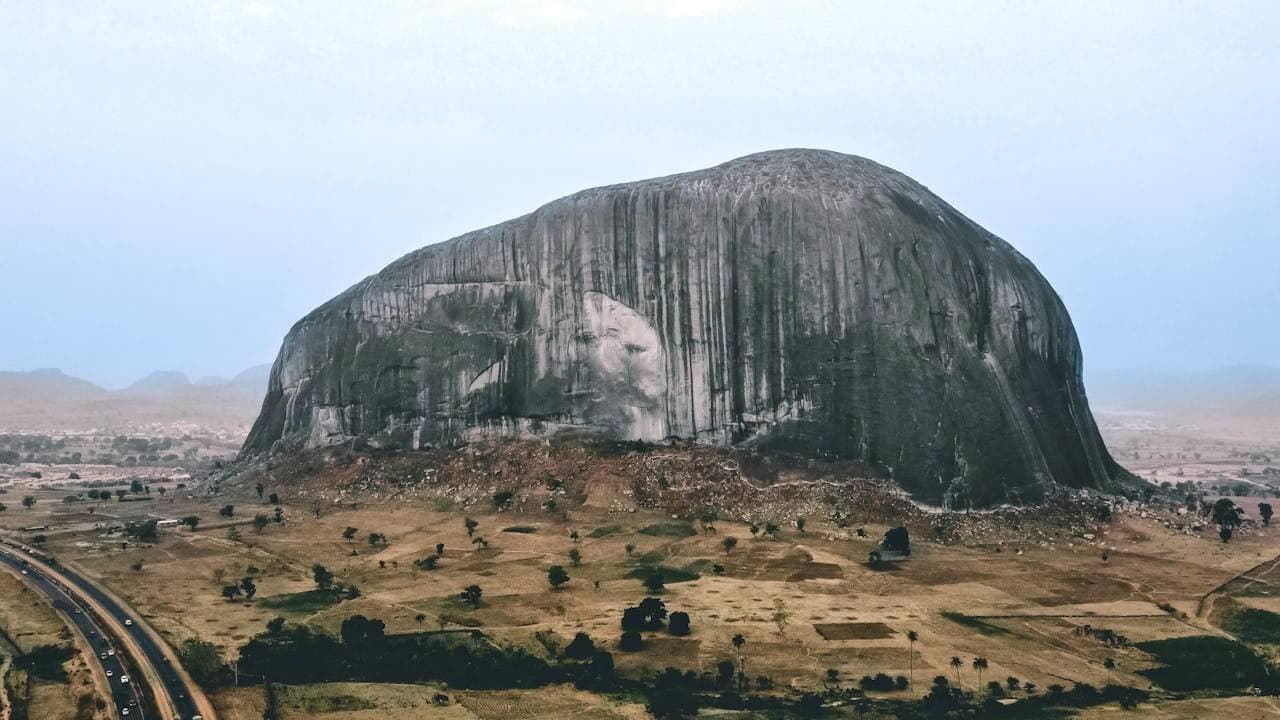
"A massive monolith rising 725 meters above its surroundings, known as the "Gateway to Abuja"."
Zuma Rock is a colossal igneous monolith that rises dramatically from the plains near Madalla in Niger State, just outside Abuja, Nigeria’s capital. Towering about 300 meters above the surrounding landscape and reaching around 725 meters above sea level, it dominates the skyline and instantly captures the attention of travelers heading into Abuja.
Often described as the “Gateway to Abuja from Suleja,” Zuma Rock sits right along the busy Abuja–Kaduna expressway, greeting drivers with a view that feels almost surreal. Because it is only around a 40–45 minute drive from central Abuja, it has become a popular day-trip destination for residents, tourists, and photographers looking for a striking natural backdrop.
For local communities such as the Gwari/Zuba people, Zuma Rock is much more than a landmark; it is a spiritual presence woven into their history and stories. It has long been regarded as a protective rock, a kind of ancient guardian that watches over the area and offers shelter, guidance, and in some tales even mystical powers.
Its importance goes beyond local folklore and into national symbolism: Zuma Rock is featured on the Nigerian 100 naira note, a clear nod to its role as an icon of the country. This combination of cultural reverence and official recognition makes it a compelling subject for content related to Nigerian heritage, identity, and tourism.
One of the most captivating aspects of Zuma Rock is the natural pattern on its surface that resembles a human face, complete with eyes, nose, and mouth. This “face of Zuma Rock” is visible from a distance and is often the first detail that fascinates visitors and inspires countless photographs and social media posts.
Local legends build on this unique appearance, claiming that ancestral spirits inhabit the rock and that the “face” watches over travelers and nearby communities. There are also stories of mysterious lights or fires seen near the top of the rock during the rainy season, adding a layer of mystery that keeps the imagination active and makes the site perfect for engaging storytelling.
Although full technical climbs are less common than at some international rock sites, visitors can enjoy walks and guided hikes around the base and lower slopes of Zuma Rock, soaking in impressive views of the plains and surrounding settlements. The contrast between the flat land and the near-vertical rock walls makes every angle photogenic, especially at sunrise and sunset when the light paints the rock in warm colors.
The area around Zuma Rock features leisure spots and resorts where visitors can relax, have picnics, or organize group trips and corporate retreats. These facilities turn a simple sightseeing stop into a more complete experience that combines nature, relaxation, and informal learning about geology and Nigerian culture.
Quick Facts
- •Height: 725 meters above sea level
- •Featured on the Nigerian 100 naira note
- •Known as the "Gateway to Abuja"
- •Famous for the natural "human face" pattern on its surface